How does AI tarot reading work? A plain explanation
A no-mystery breakdown of how an AI tarot reading is actually generated — what the model knows, what it makes up, and why two AI readers can give different answers to the same cards.
Short answer up front: an AI tarot reading is generated by a large language model that has been trained on millions of pages of tarot literature, prompted with the specific cards you drew and the question you asked. The randomness lives in the card draw — that is real and uses a cryptographically sound shuffle. The interpretation is the model talking about those cards in light of your question. Nothing else is happening.
That said, "talking about cards" is a much richer process than people expect. This article walks through exactly what happens when you tap "draw" on an AI tarot site like AskTarot, in the order it happens, with no marketing language.
Is AI tarot real tarot?
Yes — to the same extent that any book of tarot meanings is real tarot. The cards drawn are the same 78-card deck used by human readers for over 200 years. The meanings the AI draws on are the published interpretive tradition: Rider–Waite–Smith symbolism, modern psychological readings, and the layered keywords reproduced in every reputable tarot resource. What the AI adds is the ability to apply that tradition to your specific question in plain language, instantly.
What AI tarot is not: it is not a person with intuition, it is not a spirit, and it is not a fortune-telling oracle that "knows" your future. The cards reveal patterns and possibilities, and the AI describes those patterns. The accuracy of the description depends on the precision of the question and the depth of the model. The accuracy of the divination is its own conversation — see the next section.
How does an AI tarot reading actually get generated?
There are four distinct steps. They happen in under three seconds, so it feels like one motion, but each step is doing different work.
- 01Card draw: the site runs a Fisher–Yates shuffle over a 78-card deck using a cryptographically secure random number generator. This is the only "random" step. It is the same level of randomness as a well-shuffled physical deck — no patterns, no bias.
- 02Spread layout: each drawn card is assigned a position with a specific meaning (e.g. "past influence", "challenge", "outcome"). The spread you chose decides the positions; the cards stay in draw order.
- 03Prompt construction: the site builds a prompt for the language model containing your question, the cards drawn, the position of each card, the reader persona you selected, and a structured instruction to interpret the spread for your specific situation.
- 04Generation: the language model produces the interpretation token by token. Same model, same prompt, slightly different output each run — because the model samples from a probability distribution rather than emitting one fixed answer.
Step four is where most of the perceived "magic" lives. The model has read enough tarot writing to know what a Three of Swords in a "challenge" position tends to mean when someone is asking about a breakup. It applies that knowledge to your exact wording. It does not predict the future; it interprets the cards.
Is AI tarot accurate?
For card meanings: yes, very. A modern language model has the entire Rider–Waite tradition, Pamela Colman Smith's imagery, the Crowley Thoth deck readings, modern psychological tarot, and most major card-meanings books inside its training data. It rarely gets a card meaning wrong. For nuanced readings — combining cards, weighing reversals, accounting for the spread's structure — it performs well above the level of a beginner human reader, and roughly at the level of a thoughtful intermediate human reader.
For predicting events: tarot itself does not predict events in the sense people sometimes hope. It reads the energy and likely trajectory of a situation given current patterns. AI tarot is exactly as accurate at this as the tradition it draws from. Which is to say: useful for self-reflection and pattern-spotting, not useful for "will he text me back this week".
For your specific question: accuracy depends almost entirely on how well you phrased the question. "What is keeping me attached to this relationship" gets a useful reading. "Will I get back together with him by July" mostly gets a polite reframing of the question.
Why do two AI tarot readers give different answers to the same cards?
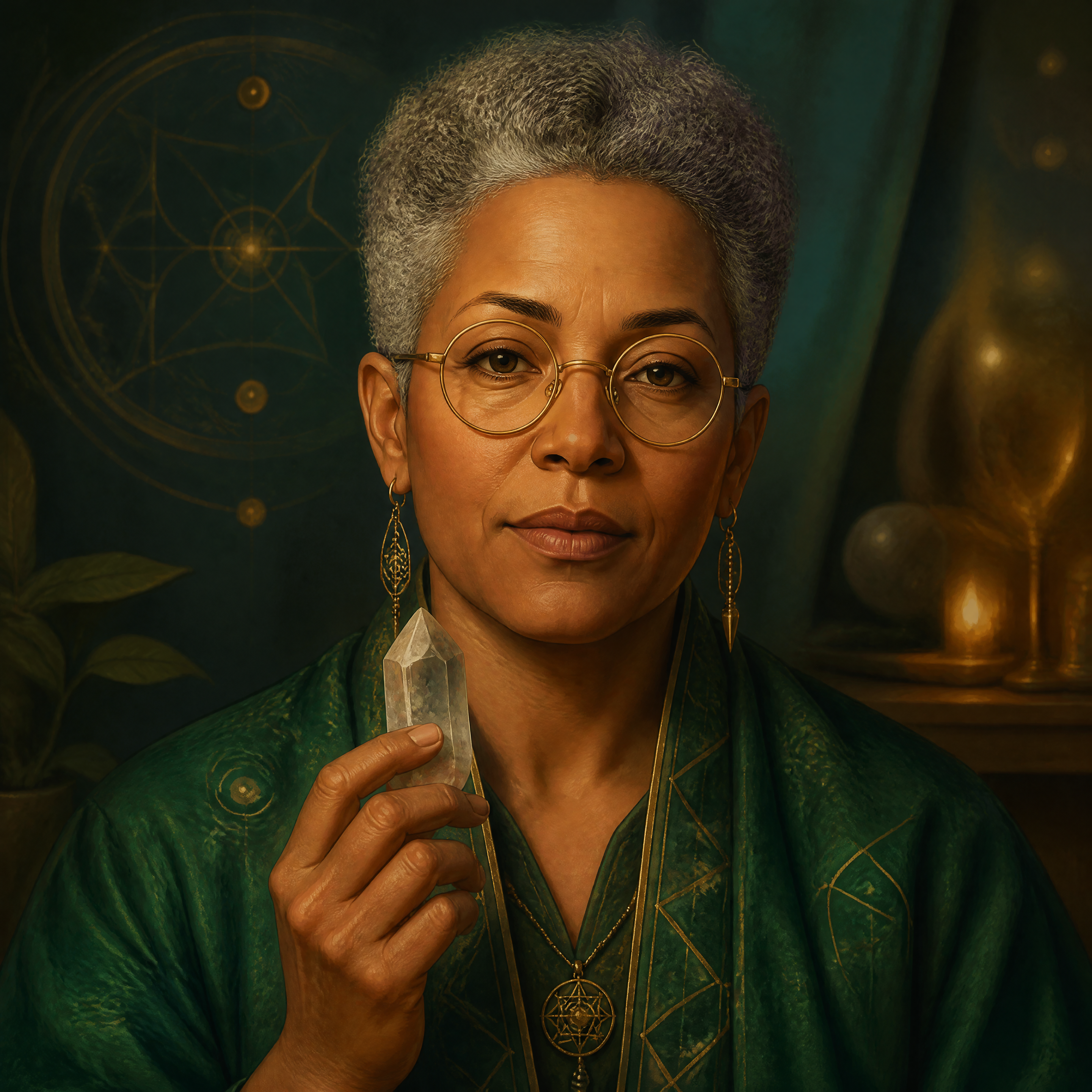
This is the most common confusion, and the answer is simple: the persona is part of the prompt. On AskTarot, the same three cards interpreted by Luna (gentle, encouraging) versus Raven (direct, no sugar) versus Sage (experienced elder voice) genuinely produce different readings — because the model is told to interpret the cards through that voice. The cards do not change. The lens does.
This is not a bug. It mirrors what happens with human readers too: ten human tarot readers will give you ten different readings of the same three cards. The cards have a vocabulary; how it is spoken depends on the voice speaking it. The reason AskTarot offers multiple personas is to let you pick the voice your question actually needs. A breakup reading from a relentlessly upbeat reader is useless. So is a career reading from one who keeps softening the answer.
Is AI tarot safe to use for personal questions?
Yes, with two caveats. The first is privacy: read the privacy policy of any tarot site before typing genuinely sensitive things into it. AskTarot stores no question content beyond what is required to render the reading; many sites do otherwise. The second is psychological: AI tarot is available 24/7, and that availability can become its own problem. The deck does not have more to say at 3am than it did at noon. If you find yourself pulling the same question repeatedly, close the app and come back when the question is curious rather than desperate.
What AI tarot does well — and what it does not
AI tarot is good at:
- ·Explaining what a specific card means in your specific situation (faster and clearer than most beginner human readers).
- ·Combining cards into a coherent narrative when the spread has 3–10 cards.
- ·Surfacing the symbolic patterns you might have missed because you are too close to the question.
- ·Being available at 2am when you cannot sleep and the friend you would normally text is asleep.
- ·Reading in your language — for non-English speakers, the quality gap between a generic English tarot site and a native-language AI reading is huge.
AI tarot is not good at:
- ·Reading energy in a room. A skilled human reader picks up on your posture, tone, what you are not saying. AI cannot do this.
- ·Long-term mentorship. A human reader who knows your patterns over time will give you better reads in the long run.
- ·Holding space for grief. The conversation matters more than the cards in that moment, and a real person is better at that.
- ·Producing predictions about specific dated events. Neither can human tarot, but humans are better at saying so.
Bottom line
An AI tarot reading is a language model trained on the entire interpretive tarot tradition, applied to a fair card draw, in the voice of the reader persona you chose, answering the question you asked in plain language. It is not magic. It is also not a parlour trick. Used the way the tradition intends — for self-reflection and pattern-spotting, not for predicting a partner's text — it does the same job the deck has done for two hundred years, available in nine languages at three in the morning.
Continuer la lecture
Ramène-le aux cartes
La théorie est une chose ; tirer une carte avec une vraie question en est une autre. La version gratuite t'offre trois lectures par jour, en conversation complète avec n'importe laquelle des trois lectrices.
Commencer une lecture